Africa’s youth employment challenge is becoming less about whether young people work and more about whether they can find productive work that supports higher incomes and economic transformation. The Africa Youth Employment Outlook 2026 estimates that about 304 million young Africans were working in 2025, representing roughly 57% of the continent’s youth population. That number could rise to 437 million by 2040, while the employment share is expected to remain largely unchanged.
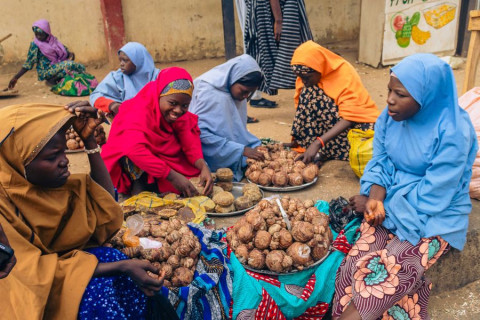
The figures challenge the familiar picture of an unemployed generation waiting to enter the economy. Most young Africans are already working, but many are concentrated in informal and low-productivity activities. The Economic Commission for Africa has estimated that 10 to 15 million young people enter Africa’s labor market each year, while only around 3 million formal jobs are created. The gap pushes millions toward informal employment rather than leaving them outside the labor market altogether.
That distinction matters because employment alone does not guarantee economic mobility. Informal work can provide income and absorb large numbers of new workers, but it often comes with lower productivity, limited social protection and weaker job security. The ILO estimates that 2.1 billion workers globally will be in informal employment in 2026, while emphasizing that informality is closely associated with inadequate earnings and weaker working conditions.
Africa therefore faces a structural challenge: its economies need to create more productive activities at roughly the same time as their labor forces are expanding rapidly. Agriculture, small businesses and informal services will remain important sources of employment, but they cannot by themselves deliver the productivity gains needed to raise incomes across a rapidly growing population. Industrial production, construction, modern services, agribusiness and technology-based businesses will need to absorb a larger share of the workforce.
Skills are part of the equation, but training alone cannot close the gap. The World Bank has noted that most new African workers will continue to earn their livelihoods in agriculture, small enterprises and the informal economy because formal wage employment is unlikely to expand fast enough. The central challenge is therefore not simply preparing young people for jobs, but expanding the sectors capable of creating productive demand for their skills.
That makes economic transformation critical to Africa’s demographic outlook. The ILO has argued that the continent’s growing youth population can become a driver of economic transformation only if productive and decent job creation is placed at the center of economic strategies. Without stronger productivity growth and structural transformation, demographic expansion could increase the number of workers without producing a comparable improvement in living standards.
Central Africa illustrates the challenge. Countries such as the Democratic Republic of Congo and Cameroon have substantial natural resources and opportunities for industrial development, yet weak infrastructure, limited electricity supply, and shallow formal labor markets constrain their ability to convert those assets into broad-based jobs. Expanding local processing, manufacturing and higher-value services could create more productive opportunities while allowing young workers to participate in economic transformation rather than simply finding ways to survive within the informal economy.
Africa’s demographic opportunity will ultimately depend on what happens to the millions of young people already entering the workforce. Keeping them in low-productivity informal activities may absorb labor, but it will do little to raise incomes or accelerate structural transformation. Moving a larger share of workers into manufacturing, modern services, agribusiness, construction and other higher-productivity sectors will require investment, infrastructure, and stronger demand for their skills. Without that shift, a growing workforce could simply mean more people competing for the same limited economic opportunities. The challenge for African economies is therefore not just to create more jobs, but to create a path from mere employment to higher productivity and rising incomes.