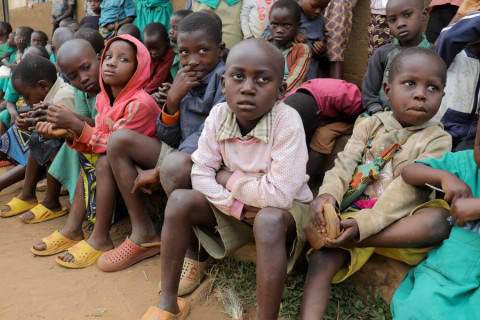
Africa’s education challenge is no longer only about getting children into classrooms. It is increasingly about whether they acquire basic reading, writing, and mathematics skills once they are there. According to UNESCO, the African Union, and UNICEF, more than 75 million additional children were enrolled in school across the continent by 2024 compared with 2015, yet the number of children out of school also increased by 13.2 million. Access has expanded, but progress in enrollment has slowed, while learning outcomes remain weak.
Only about 10.8% of children in Africa achieve minimum proficiency in both reading and mathematics by the end of primary school, according to the 2025 UNESCO–African Union Spotlight Report. That figure captures the difference between attendance and learning: being enrolled does not guarantee that students leave primary school with the foundational skills needed for further education or employment.
Teacher shortages are putting additional pressure on already stretched systems. UNESCO estimates that sub-Saharan Africa will need around 15 million additional teachers for primary and secondary education by 2030 to meet projected demand. Where qualified teachers are scarce, classrooms can become overcrowded, leaving students with little individual attention and making it harder to address learning gaps.
Language can create another obstacle even before a child begins to master the curriculum. Millions of children in sub-Saharan Africa are taught in languages they do not fully understand, according to UNESCO. When the language used at school differs substantially from the language spoken at home, children can struggle to grasp basic concepts, regardless of whether textbooks or classrooms are available.
Infrastructure and learning materials add to the problem. Schools in many parts of the continent continue to face shortages of electricity, water, adequate classrooms, textbooks, and other basic resources, with rural communities often facing the greatest constraints. Limited access to digital tools can further widen the gap between students who have access to additional learning resources and those who do not.
The consequences extend well beyond the classroom. Children who leave primary school without basic literacy and numeracy face greater difficulty acquiring advanced skills later in life, while employers encounter a workforce that may have spent years in education without developing the capabilities needed for more productive employment. For economies seeking to industrialize, expand modern services, and move into higher-value activities, improving learning outcomes is therefore closely linked to economic transformation.
Central Africa faces many of the same pressures. Cameroon, the Republic of Congo, and other countries in the region have expanded access to education, but teacher shortages, infrastructure gaps, language barriers, and uneven learning outcomes continue to limit the quality of education. UNESCO’s 2025 Spotlight Report includes Cameroon among the countries examined in depth, reflecting the broader shift in attention from enrollment alone toward the quality and equity of learning.
Expanding enrollment remains important, but it cannot be the final measure of progress. African education systems will need to put more qualified teachers in classrooms, reduce overcrowding, improve basic infrastructure, strengthen access to learning materials, and ensure that children can learn in languages they understand. For Central Africa, where demographic growth will continue to increase demand for education, closing the gap between school attendance and actual learning will be essential to turning a growing student population into stronger human capital.