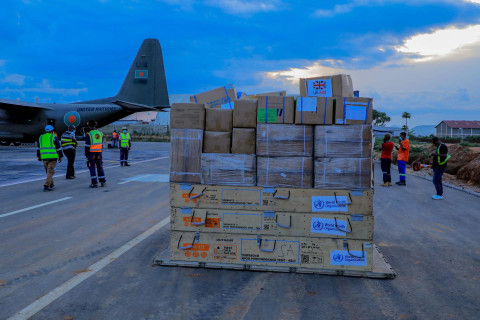
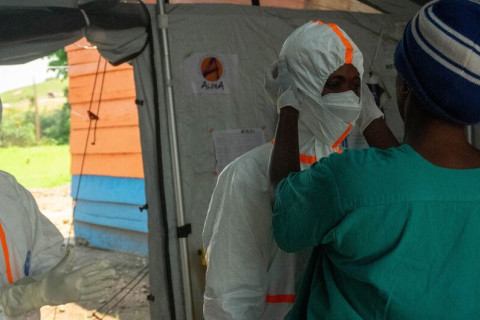
The Democratic Republic of Congo’s long struggle with Ebola highlights a problem that medical science alone cannot solve. Even when governments and international organizations provide vaccines, protective equipment, mobile medical teams and other tools to contain an outbreak, deeply rooted social practices can continue to expose people to infection.
The challenge is not necessarily a lack of medical capacity or opposition to modern healthcare. It is the strength of social and cultural habits that people continue to follow even when a deadly virus makes those habits dangerous.
Funeral traditions offer one of the clearest examples.
In some communities, mourners traditionally touch the body of a deceased relative as part of the farewell ceremony. Under normal circumstances, such contact is an expression of grief, respect and family solidarity. During an Ebola outbreak, however, it can become a serious health risk because the bodies of people who have died from the disease can remain highly infectious.
This creates a direct conflict between public-health requirements and established social norms. Health authorities can introduce safe-burial procedures and explain the risks, but changing the way people say goodbye to their dead is far more complicated than introducing a new medical protocol.
The same tension exists before a person even becomes a patient.
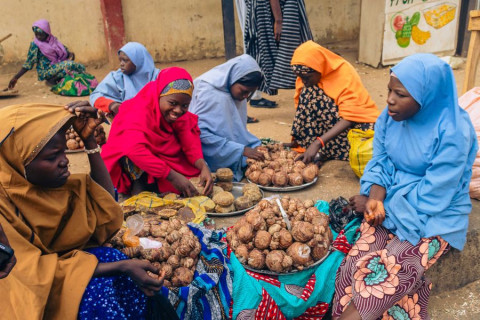
In rural parts of the DRC, hunting and consuming bushmeat remains an important part of local diets. Wild animals can provide an essential source of food, particularly in communities where alternatives are limited. Yet handling or consuming infected wildlife can provide an opportunity for Ebola to pass from animals to humans.
Telling people to abandon such practices does not necessarily make them disappear. For communities that have relied on hunting for generations, the risk posed by an invisible virus may be less immediate than the practical need to feed a family.
Once infection enters a household, another layer of risk emerges. Caring for a sick relative often involves close physical contact, particularly in communities where access to healthcare is limited. The actions that demonstrate responsibility toward a family member can therefore become potential points of exposure during an Ebola outbreak.
This is what makes outbreaks such as Ebola particularly difficult to control. The virus does not encounter people as isolated individuals. It encounters families, communities and social traditions.
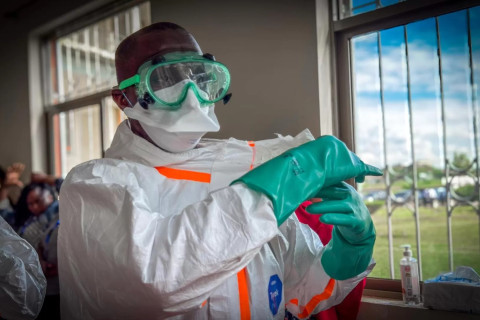
Medical authorities can isolate patients, provide protective equipment, establish treatment centers and deploy vaccination campaigns. But they cannot place a medical barrier between every person and every social interaction. Containment ultimately depends on people changing behaviors that may have little connection to medicine and deep roots in everyday life.
That does not mean communities are deliberately putting themselves at risk. It means that the perceived importance of maintaining a tradition, caring for a relative or obtaining food can sometimes outweigh the fear of a disease that is invisible and may still seem distant.
For public-health authorities, this creates a challenge that cannot be solved by medical intervention alone. Containment measures must take into account how communities actually live, while offering practical alternatives to behaviors that become dangerous during an outbreak.
The DRC’s experience offers a broader lesson: fighting an epidemic requires more than controlling a virus. It requires changing human behavior — especially when the behavior in question is deeply embedded in the social fabric of a community.