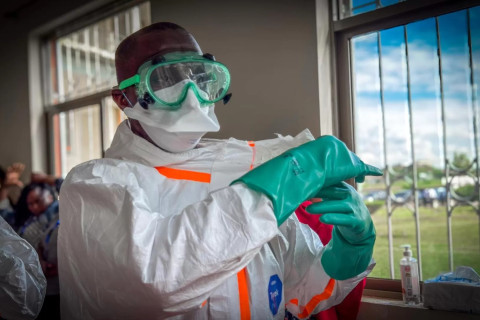
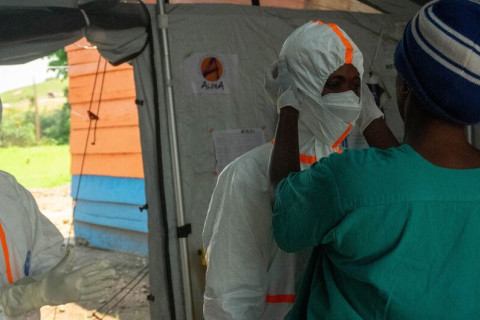
Cameroon has moved from planning to the practical implementation of its first national Emergency Medical Team, creating a dedicated capacity to respond rapidly to epidemics, natural disasters and humanitarian emergencies. The initiative, developed with support from the World Health Organization, is now entering its training and operational preparation phase, with the first group of specialists being assembled and trained in recent weeks. The goal is to build an 80-member multidisciplinary team capable of deploying within 72 hours when a major emergency overwhelms local health services.
Several months after the project was formally launched in May 2026, the initiative has therefore moved beyond an initial planning exercise. Training for the first national team took place in Ebolowa in late August, while Cameroon’s Ministry of Public Health presented the development at the WHO Regional Committee for Africa meeting in late August. The project brings together specialists from 26 professional areas, including emergency medicine, surgery, nursing, laboratory services, logistics and infection prevention and control. Building such a multidisciplinary structure is intended to allow the country to deploy a complete medical response rather than rely on separate personnel and resources being mobilized after a crisis has already begun.
Cameroon faces a broad range of emergencies that can place pressure on its health system. Epidemic outbreaks remain a recurring risk, while floods, landslides and humanitarian crises can rapidly disrupt access to medical care. Conflict-affected areas present an additional challenge, particularly where shortages of qualified personnel, weak logistics and limited access make it difficult to move medical resources quickly. A national emergency team is designed to address precisely this gap by creating a trained pool of specialists that can be deployed to affected areas when existing local capacity is insufficient.
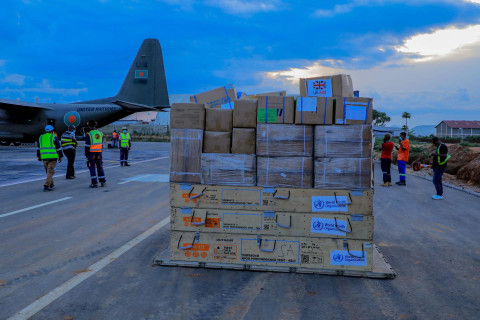
Much of the work, however, remains ahead. The current phase focuses on building the team and developing the systems needed for deployment, rather than operating a fully equipped national emergency unit. Cameroon and WHO are working on training materials, operational procedures and simulation exercises, while procurement of the equipment required for field deployment is expected to continue through the end of 2026. Simulation exercises will be particularly important because the 72-hour deployment target depends not only on having qualified personnel, but also on logistics, coordination and the ability to move equipment and medical supplies rapidly.
The project is therefore better understood as an attempt to strengthen Cameroon’s emergency-response infrastructure rather than simply create another medical team. If completed as planned, it would give the country a standing national mechanism for mobilizing specialized medical personnel during major crises and reduce dependence on ad hoc responses or external teams. The next test will be whether training can be translated into operational readiness, including equipment, logistics and repeated simulation exercises. Until those elements are in place, the 72-hour deployment target remains a goal rather than an established capability.
Cameroon’s move also reflects a broader shift toward building national capacity to manage health emergencies. International assistance remains important, but developing a domestic emergency medical team gives the government greater control over the first response when a crisis occurs. For a country exposed to epidemics, climate-related disasters and humanitarian emergencies, that institutional capacity could become as important as the medical expertise of the team itself.