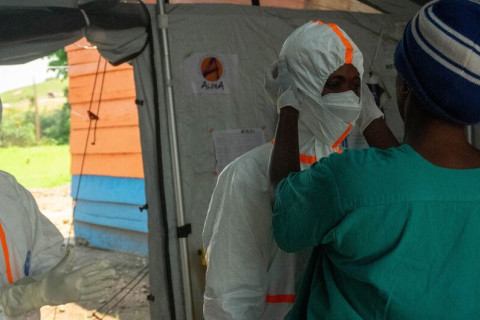
The Democratic Republic of the Congo (DRC) has unveiled a revised six-month response plan to combat its deadliest Ebola outbreak on record, appealing for $1.3 billion in international funding as the virus spreads at unprecedented speed across six provinces.
The outbreak, caused by the rare Bundibugyo strain and declared a public health emergency of international concern by the World Health Organization in May, has killed more than 3,000 people out of over 6,300 confirmed cases as of early September. It has become the fastest-growing Ebola epidemic in the country's history, affecting 60 health zones and overwhelming treatment facilities, according to the U.S. Centers for Disease Control and Prevention.
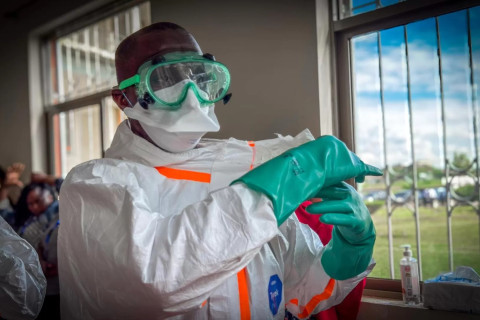
The new 180-day plan, supported by the WHO, the Africa Centers for Disease Control and Prevention, and other partners, aims to strengthen epidemiological surveillance, contact tracing, patient care, community engagement, and logistics in affected provinces.
While Ituri Province remains the national epicenter, accounting for more than 80% of confirmed cases, Nord Kivu is experiencing a sharp acceleration in infections. Between August 30 and September 4, nearly a third of the country's 422 new cases were recorded in Nord Kivu, where confirmed cases rose from 836 to 969 in just five days.
The province is reporting between 20 and 32 new confirmed cases daily, with a fatality rate of nearly 66%, well above the national average of 48%.
Treatment centers in the region are overwhelmed, with more than half of patients being treated outside Ebola-dedicated facilities as of September 3. Complicating the response, rebel-controlled areas have also reported new cases after previously declaring their outbreaks over.
Beyond Ebola, DR Congo is grappling with multiple concurrent health emergencies. In Sud Kivu Province, health authorities reported 449 suspected cholera cases and 13 deaths in a single week spanning late August and early September.
Of the province's 34 health zones, 17 recorded at least one suspected case, with Kimbi-Lulenge, Bunyakiri, Shabunda, Mulungu, and Bukavu's Ibanda area most affected. Since January, Sud Kivu has registered more than 11,100 suspected cholera cases and 195 deaths.
In southwestern Kasai Province, health authorities have intensified surveillance after four deaths and more than 30 suspected mpox cases were reported in the Luebo health zone. Local health services identified suspected cases in the Mukuandianga and Kambangoma health areas, with samples collected for laboratory testing.
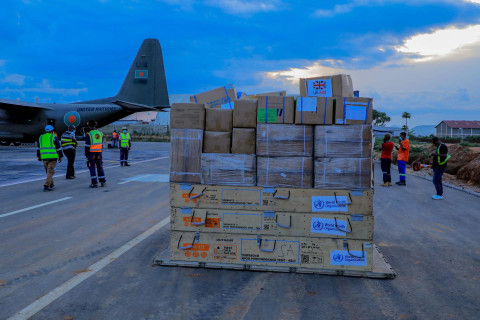
WHO has deployed over 300 technical experts and delivered more than 330 tons of medical supplies, but additional funding is needed to expand bed capacity across treatment centers. Operating a single 1,500-bed facility costs approximately $15 million per month. The revised humanitarian response plan calls for $2.1 billion in total, including $300 million specifically for Ebola-related activities across the humanitarian system.