The social fabric of Central Africa is undergoing a profound transformation. Key countries of the region — primarily the Democratic Republic of Congo and Angola — are facing unprecedented social challenges driven by rapid urbanisation, a youth population bulge, and persistently weak public health systems.
Unlike political crises that make headlines, social developments unfold beneath the surface, yet their long-term impact on regional stability is no less significant.
Demographic pressure: the ticking bomb of Kinshasa and Luanda
The most striking social trend in the region is hyper-urbanisation. The DRC, with a population exceeding 100 million, is witnessing one of the fastest urban growth rates in the world. The capital, Kinshasa — a megacity of approximately 17 million people — is projected to become the third most populous city in Africa by 2030. However, municipal services are collapsing under the weight.
According to local social surveys, nearly 60% of Kinshasa's residents live in informal settlements lacking running water, sewage systems or regular waste collection. Angola's capital, Luanda, while wealthier due to oil revenues, faces a similar divide: modern glass towers coexist with overcrowded musseques (shantytowns) where families share single rooms.
Sociologists note that this spatial segregation is creating a new social reality — a permanent underclass disconnected from formal employment and state institutions. The consequence, as observed by local NGOs, is rising rates of petty crime, child abandonment and inter-communal tensions.
The youth bulge: 60% under 25 and no jobs
Across Central Africa, the demographic structure is overwhelmingly young. In both the DRC and Angola, more than 60% of the population is under the age of 25. This could be a demographic dividend — but only if accompanied by education and employment. In practice, the opposite is occurring.
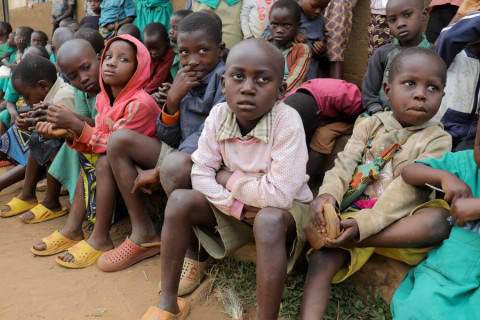
School enrolment rates in the DRC remain among the lowest in the world. According to UNICEF data cited by social affairs monitors, approximately 3.5 million Congolese children of primary school age remain out of school. In rural areas of Kasai and Ituri provinces, girls are disproportionately affected, with only one in three completing primary education.
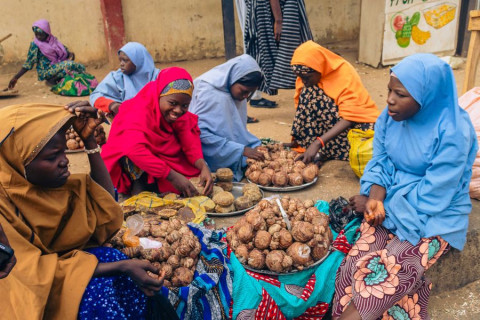
For those who do graduate, the labour market offers little. Angola's youth unemployment rate, officially estimated at over 40%, masks an even grimmer reality: most young people work in the informal economy — street vending, small-scale mining or domestic service — without contracts, social protection or predictable income.
Healthcare: a two-tier system
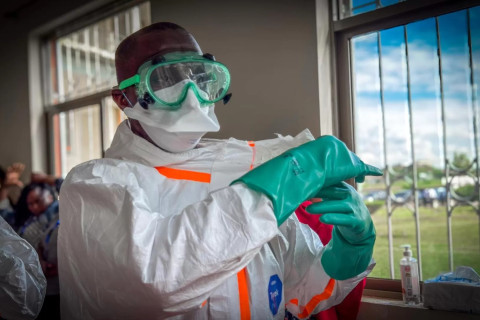
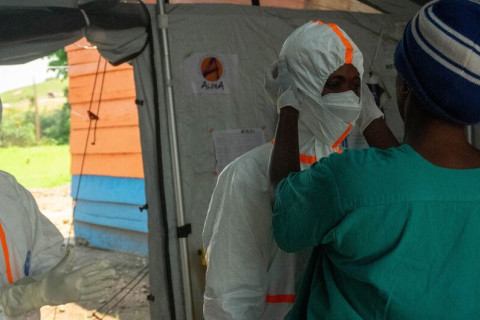
Social development cannot be discussed without addressing public health. The region continues to suffer from periodic outbreaks of preventable diseases. The DRC has recorded multiple measles and cholera outbreaks in 2025–2026, primarily affecting children under five in overcrowded displacement camps around Goma and Bunia.
Angola, despite higher GDP per capita, struggles with maternal mortality rates that remain among the highest in Southern Africa. The root cause, social workers report, is not a lack of medicine but a lack of access: rural clinics are understaffed, and even in Luanda, the poorest families cannot afford transportation to state hospitals.
A recent social survey conducted in Huila province (Angola) found that over 30% of rural households rely on traditional healers as their first — and often only — point of contact for serious illness, simply because the nearest government clinic is a six-hour walk away.
Social stratification and the new middle class
Not all social trends are negative. Both Angola and the DRC have seen the slow emergence of a small but visible middle class, concentrated in capital cities and oil or mining hubs (such as Cabinda in Angola and Lubumbashi in the DRC). This group — civil servants, mid-level managers, telecom employees — is driving demand for private schools, gated housing complexes and international retail.
However, this creates a paradoxical social dynamic: economic growth coexists with mass impoverishment. The gap between the new middle class and the urban poor is widening, and social mobility is declining. Researchers describe this as a "fractured society" — one where GDP figures improve but human development indicators stagnate.
Unanswered social questions
Thus, the social developments in Central Africa — from the overcrowded slums of Kinshasa to the understaffed clinics of rural Angola — present a challenge that no amount of diplomatic negotiation can solve. The region is becoming younger, more urban and more unequal.
For the DRC and Angola, as the two largest economies in the subregion, the coming decade will be defined not by resource exports but by their ability to invest in education, primary healthcare and job creation. Without these investments, as social analysts in Luanda caution, the demographic "dividend" risks turning into a destabilising force for an entire generation.