When discussing Central Africa, international observers rarely look beyond military maps and political transitions. Yet, the real test of the region’s future is taking place on the social front. Today, societies across Chad and the Central African Republic (CAR) are facing a dual reality: they are bearing the brunt of staggering economic and demographic pressure, while simultaneously engineering quiet, localized models of social resilience.
As the region enters the challenging summer lean season, the intersection of inflation, migration, and local integration is redefining Central African society.
The Cost of Survival: Inflation Shock in CAR
In the Central African Republic, the social narrative is currently driven by market prices. While macro-level disarmament programs are moving forward, everyday life for ordinary citizens remains incredibly precarious. Recent field reports from regions like Haut-Mbomou and towns like Zemio paint a troubling picture of economic isolation.
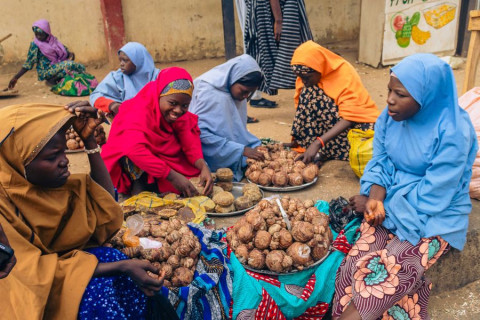
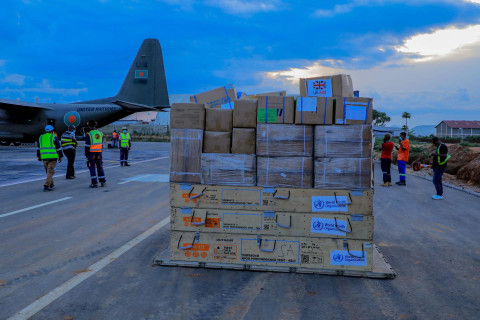
Disrupted supply chains and localized insecurity have triggered a massive spike in the cost of basic commodities. In some areas, prices for staple foods have surged threefold, effectively crushing the purchasing power of average households. For a society already exhausted by years of instability, this economic pressure translates directly into acute food insecurity. Humanitarian actors are scrambling to distribute seeds and agricultural tools for early recovery, but the reality is clear: social stability cannot be achieved when communities are trapped in a daily battle for basic nutrition.
Chad: Moving Beyond the "Refugee Camp" Model
Meanwhile, neighboring Chad is currently the site of one of the most massive social and demographic shifts in modern African history. Hosting over 1.5 million refugees—mostly fleeing the civil war in Sudan—the country has passed the point where this can be treated as a temporary emergency. It is now a permanent structural reality.
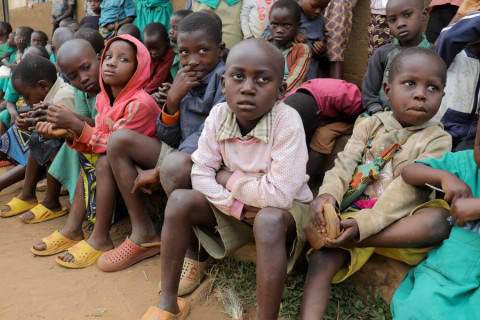
Interestingly, Chadian society and regional authorities are shifting their approach. Recognizing that short-term humanitarian aid is shrinking globally, there is a deliberate, strategic transition toward socio-economic inclusion. Instead of keeping displaced populations isolated, Chad is working on integrating refugee schools into its national education system. This includes the massive undertaking of recruiting thousands of refugee teachers and building permanent classrooms in host communities.
However, this social experiment is running on a dangerously tight budget. With the lean season officially starting this June, nearly 3 million people in Chad are projected to face severe food insecurity. The strain on local resources in eastern provinces like Ouaddaï is immense, testing the limits of traditional local hospitality.
The Silent Crisis: The Vulnerability of Moving Populations
The social landscape is further complicated by the sheer volume of "mixed movements"—populations moving not just away from conflict, but toward perceived economic safety. According to the latest UNHCR and IOM data for June 2026, women and children continue to make up roughly 80% of the refugee population in the broader region, bearing the heaviest burden of displacement.
At the same time, young men are increasingly drawn into hazardous, unregulated economic sectors, such as informal gold mining. This trend is creating deep social vulnerabilities, splitting families apart and exposing young demographics to exploitation and trafficking along transit routes.
For the agencies actively involved into managing regional socio-economic challenges, it is obvious that Central Africa’s social challenges cannot be solved by traditional humanitarian hand-outs alone. The old model of managing crises through temporary camps is obsolete.
The fact that countries like Chad are trying to structurally integrate millions of newcomers into their national educational and economic frameworks is a masterclass in social endurance. However, without substantial international development capital to back these domestic policies, the sheer weight of inflation and food insecurity risks fracturing the very social cohesion these nations are trying to build.