If you ranked Central African economies by GDP alone, you might wonder why some of the world's biggest mining companies, energy producers, and infrastructure investors keep pouring billions of dollars into the region.
The numbers don't seem to match the level of interest. But GDP tells only part of the story. It measures what an economy produces today. Investors are usually looking at something different — what it could produce tomorrow. That difference helps explain why countries often described as frontier markets continue to attract global capital despite relatively modest economic output.
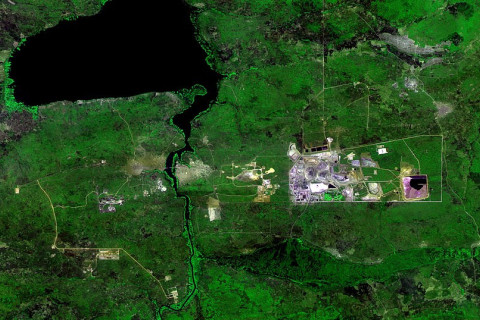
Take the Democratic Republic of the Congo. Its economy remains small by global standards, yet the country dominates global cobalt production, holds some of the world's richest copper deposits, and possesses enormous untapped hydropower potential. Those assets have strategic value that extends far beyond what appears in annual GDP figures.
The same pattern can be found across much of Central Africa.
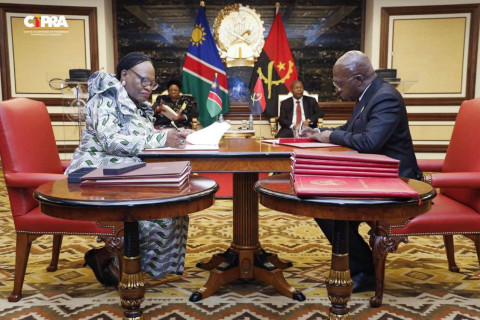
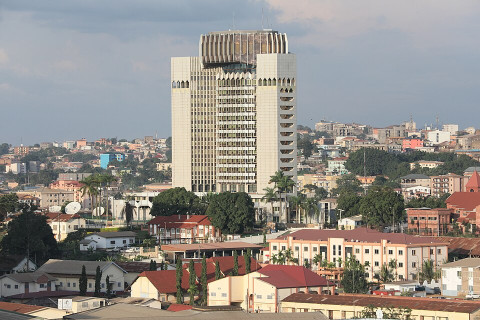
The Republic of the Congo has emerged as an LNG exporter while expanding offshore gas development. Cameroon has one of the region's most diversified economies, supported by agriculture, manufacturing, and growing port infrastructure. Gabon remains a leading producer of manganese and is trying to process more of its minerals at home instead of shipping them abroad. Angola, meanwhile, is investing not only in oil and gas but also in renewable energy and rural electrification as it looks to broaden its economic base.
The region's challenge has never been a lack of resources. The real challenge is turning those resources into lasting economic value.
That requires roads, railways, ports, power plants, transmission lines, processing facilities, and predictable institutions. Without them, even the world's richest mineral deposits generate less value than they could.
This is why infrastructure has become one of Central Africa's biggest investment stories. New railways, ports, energy projects, and digital networks are not simply construction projects. They are the missing links between natural wealth and economic growth.
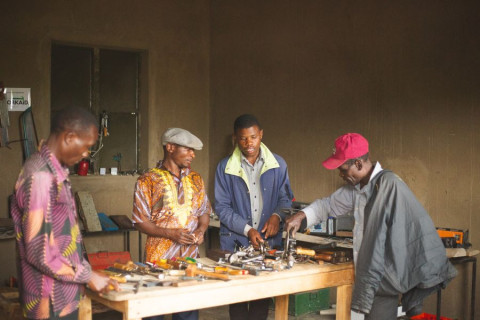
The region's demographics tell a similar story. Central Africa has one of the youngest populations in the world, giving it a labor force that will continue expanding for decades while many developed economies are getting older. Today, unemployment, skills shortages, and limited industrial capacity prevent that advantage from being fully realized. But for long-term investors, demographics are part of the region's economic potential—not just its current reality.
Geography is another asset that rarely shows up in GDP statistics. Sitting between the Atlantic and Indian Ocean trade routes and neighboring some of Africa's fastest-growing markets, Central Africa is becoming increasingly important as regional transport and trade networks expand.
None of this means GDP should be ignored. It remains one of the clearest indicators of current economic activity. But in frontier markets, GDP often says more about where an economy is today than where it could be a decade from now.
That is why international investors rarely base their decisions on a single number. They look at resources, infrastructure, demographics, geography, and long-term demand together.
Central Africa still faces serious obstacles. Infrastructure gaps remain wide. Financing is expensive. Regulatory systems are uneven, and political risk continues to shape investment decisions.
Yet capital keeps coming.
Not because investors overlook those risks, but because many believe the region's underlying assets are worth far more than today's economic statistics suggest.
For Central Africa, the question is no longer whether the potential exists. It does. The bigger question is how quickly that potential can be turned into measurable economic growth.