The "resource curse" is often used as a lazy economic cliché. Natural wealth is neither a blessing nor a destiny; it is merely an amplifier of existing state capacity. Across Central Africa, the critical bottleneck to sustainable development is not geology, but institutional sovereignty—the ability of a state to enforce its own laws, collect its rents, and protect its infrastructure without outsourcing these functions to foreign actors or operating in regulatory isolation.
Sovereign Vacuums: The Case of CAR
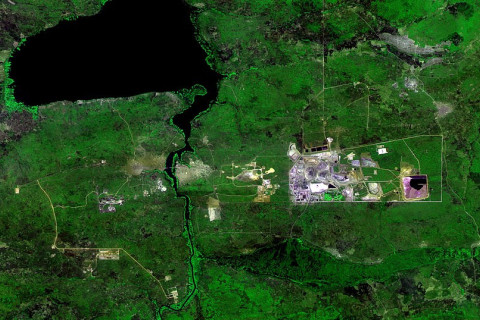
The Central African Republic (CAR) possesses immense deposits of gold and diamonds, but its mining legislation has historically struggled against a lack of territorial control. When a state cannot project physical authority beyond its capital, institutional sovereignty breaks down, leaving resource wealth to be contested by armed factions. In recent years, Bangui attempted to solve this security crisis by relying on foreign state-backed proxies. Control over strategic assets, such as the country’s only industrialized gold mine at Ndassima, shifted de facto to Russian paramilitary structures (now under the Africa Corps framework). Independent satellite imagery from early 2026 confirms that while this move successfully mechanized and industrialized production at the site, the broader institutional trap remains: when resource security is outsourced to foreign entity networks, the resulting revenues frequently bypass traditional state treasuries, financing regime survival rather than the development of permanent state institutions.
Regulatory Leverage: The DRC’s Auditing War
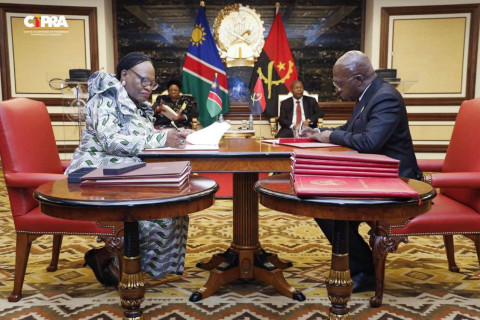
The Democratic Republic of the Congo (DRC) holds over half of the world's cobalt reserves and remains indispensable to the global electric vehicle supply chain. For decades, however, its institutional weakness allowed foreign consortiums to operate with high degrees of fiscal autonomy. The current battlefield in Kinshasa is focused on regulatory renegotiation rather than physical extraction. Following President Félix Tshisekedi’s successful push to revise the landmark Sicomines "resources-for-infrastructure" joint venture in March 2024—which forced Chinese state-owned partners to increase infrastructure commitments from $3 billion to $7 billion—the DRC has moved to the next phase of institutional pressure. In March 2026, the DRC’s oversight agency (APCSC) officially launched a comprehensive technical and financial audit of the Sicomines project spanning back to 2008. By enforcing strict state audits, resource certification, and royalty compliance, the DRC is attempting to demonstrate the regulatory muscle necessary to ensure that mineral wealth yields local fiscal upsides rather than creating isolated economic enclaves.
The Infrastructure-Governance Nexus
International players frequently assume that building physical infrastructure—like the Western-backed Lobito Corridor railway linking the Congolese copperbelt to the Atlantic—is enough to unlock regional economies. This is a technocratic illusion. Physical hardware (railways, ports, and berths) is only as effective as the institutional software governing it. Without predictable customs administrations, anti-corruption enforcement, and transparent cross-border transit protocols, the economic multiplier of infrastructure projects drops dramatically.
Beyond the Curse
Geological abundance without institutional architecture guarantees long-term volatility. When public institutions lack the capacity to audit, regulate, and secure territory transparently, natural resources fail to fund public goods; instead, they deepen investment risks and reinforce non-state networks. The definitive lesson of Central Africa is that resources can easily attract short-term capital and finance immediate security needs. Only sovereign institutions can convert those minerals into a sustainable nation.