Central Africa has been politically independent for more than sixty years. Economically, the story is far more complicated. Many of the region's countries won the right to govern themselves decades ago. What they are pursuing today is something different: greater control over how their economies create wealth and who ultimately benefits from it. This new transition is quieter than the first one. There are no declarations of independence, no flags being raised, and no dramatic political moments. Instead, it is unfolding through investment strategies, industrial policies, infrastructure projects, and a growing determination to capture more value at home rather than exporting it abroad.
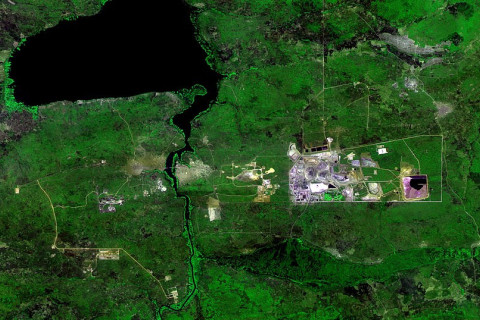
For decades, Central Africa occupied a familiar position in the global economy. The region exported raw materials and imported finished products. Copper left the Democratic Republic of the Congo as concentrate before returning as manufactured goods. Timber departed Cameroon as logs before reappearing as furniture. Oil generated government revenue, while much of the real value was created somewhere else along the supply chain.
That model is gradually beginning to change.
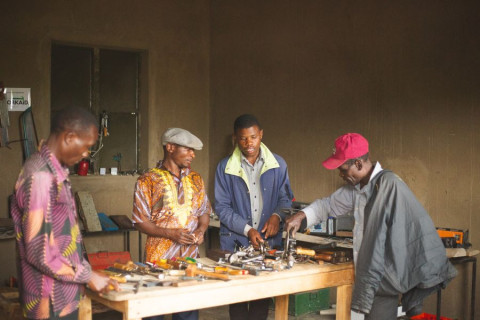
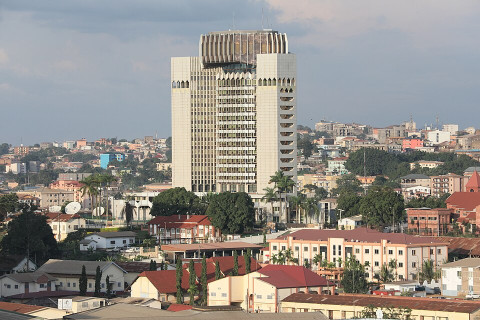
Governments across the region are placing greater emphasis on domestic processing, regional manufacturing, industrial zones, and infrastructure that serves local economies rather than simply moving commodities to export terminals. Railways are increasingly expected to connect industrial parks as well as ports. Energy projects are discussed alongside manufacturing strategies. Digital infrastructure, vocational education, and logistics are becoming part of the same economic conversation. The shift reflects a growing realization. Natural resources do not automatically create prosperity. They create opportunities.
Whether those opportunities become lasting economic growth depends on everything that happens after extraction: processing, transport, financing, regulation, education, innovation, and industrial demand. Wealth is created not simply by owning resources, but by building the economic systems that allow those resources to generate value long after they leave the ground.
The same lesson increasingly applies to energy.
Building power plants remains essential, but electricity alone does not create development. New generation only delivers economic returns when businesses, factories, data centers, mines, farms, and households are able to use that electricity productively. Infrastructure becomes development only when it supports broader economic activity rather than existing as an isolated asset.
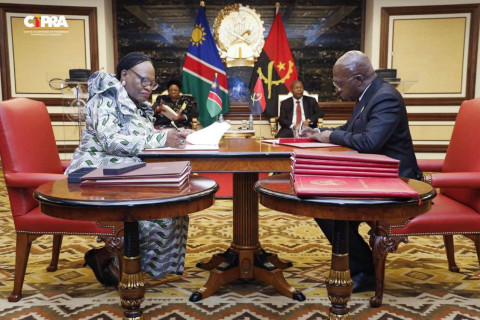
The region's relationships with international partners are evolving as well. Rather than relying primarily on a single external power, governments are increasingly working with multiple partners at the same time. Infrastructure financing may come from one country, digital expertise from another, healthcare cooperation from a third, and industrial investment from yet another. Diversification is gradually replacing dependence, giving governments greater room to negotiate according to their own priorities rather than those of a single sponsor.
None of this guarantees success.
Population growth continues to outpace the creation of formal jobs in many countries. Commodity dependence remains significant. Administrative capacity varies across the region, and regional integration still faces practical and political obstacles. Building an economy is considerably more difficult than building a road or commissioning a power plant. But the direction itself is becoming increasingly clear. The conversation is slowly moving away from what Central Africa has toward what Central Africa can build. That distinction may define the region's next decade more than any individual investment project.
The first independence gave Central Africa political sovereignty. The second is about economic confidence — the ability to process more at home, manufacture more at home, finance more at home, and gradually capture a larger share of the value created by its own resources. That transformation will not happen overnight. It will take years of investment, institutional reform, and policy consistency. Yet the foundations are beginning to appear. Central Africa's future is unlikely to be determined solely by the resources beneath its soil. It will increasingly be shaped by what governments, businesses, and people choose to build above it.
That may ultimately become the region's most important independence of all.