Angola and Democratic Republic of Congo are facing climate challenges of very different character — one struggling with advancing drought in south, another with accelerating deforestation of world's second largest tropical forest. Both situations are drawing attention of international community.
In DRC, Congo Basin rainforest remains central to global climate discussions. In eastern provinces of North Kivu, South Kivu and Maniema, decades of conflict, displacement and unsustainable farming have degraded forests and soils, increasing vulnerability to climate change. In 2020, country had second highest level of deforestation of primary forests in world, mainly due to slash-and-burn agriculture and land use changes.
DRC government presented itself as "solutions country" at international level. At COP30 in Belém in November 2025, DRC highlighted recent creation of Couloir Vert Kivu-Kinshasa — described as world's largest terrestrial protected area — alongside development of community forestry legislation and Indigenous Peoples Law.
For longer term, DRC has ambitious plans. Five-year project supported by Least Developed Countries Fund, running from 2025 to 2030, aims to strengthen climate risk management and promote agro-ecological practices in forest and mountainous zones of eastern DRC.
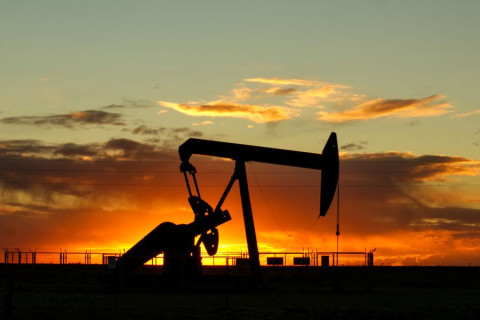
Situation in Angola is shaped primarily by drought. Angola's main development challenge is to transition from heavy dependence on oil and gas toward diversified economy built on renewable energy and climate-resilient agriculture. Country's NDC commits to reducing greenhouse gas emissions by 14 percent by 2025 relative to business-as-usual trajectory, with additional 10 percent reduction conditional on international support.
Agro-climatological analysis in Angola shows decrease in length of rainy seasons in some regions, with frequent prolonged drought episodes. Increased deforestation for agricultural expansion is identified as direct consequence of crop failures caused by changing climate patterns.
Angola submitted updated climate action plan in September 2025. Angolan government recognizes country's high vulnerability to climate change and reaffirms commitment to Paris Agreement through new Nationally Determined Contribution, built on updated National Climate Change Strategy covering period 2022 to 2035.
Both countries face common problem — gap between ambitions stated in official documents and actual capacity to implement them on ground, particularly in conflict-affected and rural areas where climate impacts are most severe.