Central Africa’s critical-minerals boom is entering a new phase. Governments that once focused primarily on increasing extraction are now pushing miners to process more of their output at home. The Democratic Republic of Congo has moved in this direction with a ban on exports of copper and cobalt concentrates, while Gabon is examining new ways to process more manganese domestically. The ambition is clear: keep more economic activity inside the region. Whether that ambition delivers broader development is a much harder question.
In the DRC, a government order signed on June 29 and reported by Reuters in August introduced a ban on exports of copper and cobalt concentrates, with limited exemptions. The measure is intended to encourage further processing inside the country. Its immediate impact should not be overstated, however. Much of Congo’s copper is already exported as refined cathode, while cobalt largely leaves the country as hydroxide. The new restrictions therefore target a specific part of the supply chain rather than the country’s mineral exports as a whole.
The broader direction of policy is nevertheless significant. Congo accounted for 74% of global cobalt mine production in 2025, according to UN Trade and Development, giving it considerable weight in a market central to batteries and the energy transition. The country is now trying to use that position to move further downstream and develop more industrial activity at home. The question is whether additional processing can create an economic ecosystem around mining rather than simply add another stage to the production chain.
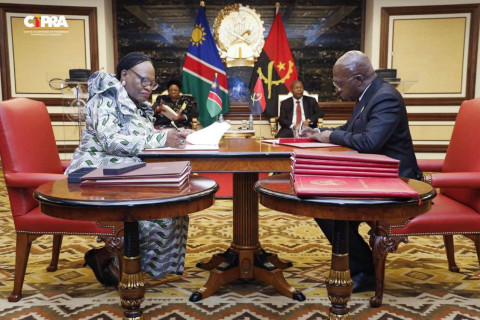
Gabon is facing a similar choice with manganese. In July, Eramet and the Gabonese government signed a memorandum examining three industrial scenarios that could eventually allow up to 700,000 metric tons of manganese ore a year to be processed domestically by the end of 2031. The proposal also highlights a constraint that can determine whether such plans succeed: reliable access to energy. Processing ore requires far more infrastructure and industrial capacity than simply mining and exporting it.
That distinction matters because a refinery or smelter does not automatically make a mining economy more inclusive. A project may bring higher revenues and more sophisticated processing while continuing to rely on imported equipment, foreign technology, and specialist labor. Local companies may remain on the margins, supplying only a limited share of goods and services. The World Bank and other development institutions have therefore emphasized the need to connect mining projects with energy, transport, logistics, water, digital infrastructure, local suppliers, and skills development.
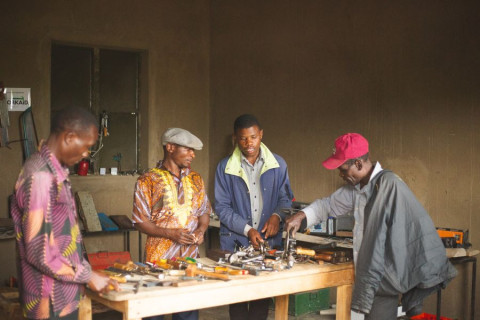
For communities near mining areas, the difference can be substantial. A mining boom can create jobs and public revenues without generating many opportunities for local businesses or helping workers move into better-paid occupations. Stronger local procurement, technical training, infrastructure investment, and access to reliable electricity can determine whether a large project becomes an isolated industrial site or a driver of wider economic activity.
Energy may be the biggest practical constraint. Expanding domestic processing will increase electricity demand at a time when unreliable power already limits industrial activity in parts of Central Africa. New mines and processing plants cannot deliver their full economic potential if the surrounding power system cannot support them. The same applies to transport: without dependable roads, railways, ports, and border connections, locally processed materials may still struggle to reach regional and global markets competitively.
Regional integration could help close some of these gaps. Large processing projects can be difficult to justify when they depend on a single, relatively small national market. Cross-border supply chains would allow neighboring economies to specialize, share infrastructure, and create demand for each other’s products and services. That could turn mineral investments into a broader industrial network rather than a collection of standalone projects.
Central Africa’s mineral boom will therefore be judged by more than how much ore is extracted or how much processing takes place locally. Its longer-term value will depend on whether mining can stimulate businesses, skills, infrastructure, and higher-productivity employment beyond the mine itself. For a region seeking to capture a larger role in the global critical-minerals economy, the real opportunity lies in making mineral wealth work through the wider economy — not simply keeping more of it inside national borders.