Copper has become one of those commodities that quietly sits at the intersection of global transformation and local limitation. As the world accelerates its shift toward electrification and cleaner energy systems, Central Africa — particularly the Democratic Republic of the Congo — finds itself in a position of clear importance, but uneven benefit.
The region’s copper story is not just about geology or production figures. It is increasingly about infrastructure that does not fully exist yet, energy systems that remain unstable, and institutions still adapting to the scale of global demand.
Democratic Republic of the Congo: a heavyweight with structural friction
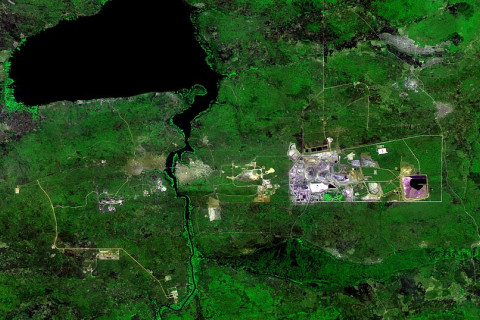
The Democratic Republic of the Congo remains the central actor in the regional copper landscape, with production concentrated in the southern mining belt of Lualaba and Haut-Katanga. On paper, the scale is significant. In practice, however, the system that supports that production remains uneven.
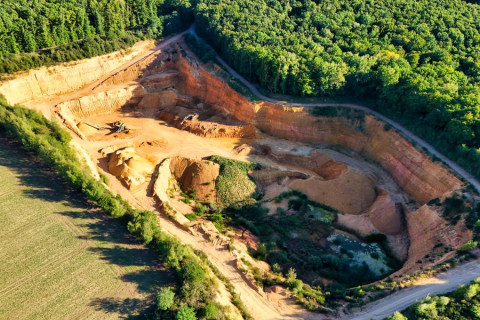
Large industrial mines — many of them backed by international and Chinese-linked investment — continue to drive output. But the country’s ability to translate extraction into broader industrial development is still limited. Copper leaves the country efficiently enough, but much of its value is added elsewhere.
One of the most persistent constraints is infrastructure. Transport routes to export corridors are stretched, and rail capacity remains inconsistent. Electricity supply — despite major hydro potential — continues to be a structural pressure point. Mining companies often compensate by building or relying on private power solutions, which raises costs and reinforces fragmentation rather than integration.
There is also a regulatory dimension that cannot be ignored. Over the past years, the government has pushed to increase state revenue from mining, which has improved fiscal returns. At the same time, it has added layers of negotiation and uncertainty for operators, particularly in a sector that depends on long-term planning.
Security conditions in certain mining-adjacent regions add another layer of complexity, even if they do not directly affect the core industrial mining belt. The broader environment still influences logistics, investor sentiment, and operational risk calculations.
Cameroon: potential that has not yet become a sector
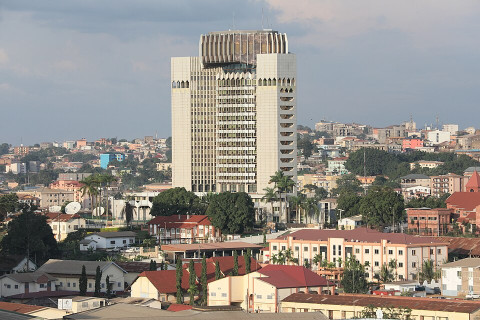
Cameroon’s role in copper is, for now, limited and largely prospective. Geological indicators suggest that copper deposits may exist in parts of the country, particularly in the north and east, but large-scale development has not followed.
Unlike its established oil and gas or iron ore sectors, copper in Cameroon remains at an early exploration stage. The main challenge is not simply resource identification, but whether conditions exist to support sustained mining investment.
Infrastructure gaps, energy distribution limitations, and administrative complexity all play a role. In practice, copper has not yet become a strategic sector in the national economy. It remains more of a possibility than a functioning industry.
Still, in a global environment where critical minerals are increasingly viewed through a security lens, even underdeveloped deposits can gain attention over time — especially if regional demand dynamics or investment patterns shift.
Central African Republic: resources overshadowed by constraints
In the Central African Republic, copper is not part of the formal economic picture. Small-scale mineral activity exists, but it is concentrated almost entirely in artisanal gold and diamond extraction. Copper remains largely unexploited and, in many areas, not systematically explored.
The main barrier is not geological curiosity but structural capacity. Persistent insecurity in parts of the country, limited regulatory reach, and weak infrastructure mean that even potentially promising resource zones struggle to attract sustained investment.
As a result, CAR sits outside global copper supply chains not because resources are definitively absent, but because the institutional and security environment has not yet created conditions for development at scale.
A regional pattern: when infrastructure becomes the real constraint
Looking across Central Africa, a clearer pattern emerges: copper development is less constrained by underground resources and more by above-ground systems.
Energy remains inconsistent across much of the region, forcing extractive projects to operate in semi-isolation from national grids. Transport networks are fragmented, with limited cross-border integration. Regulatory frameworks differ significantly from country to country, making regional coordination difficult.
These are not isolated technical issues. Together, they shape how — and whether — value is retained locally. In most cases, the region remains focused on extraction, while processing and higher-value industrial activities take place elsewhere.
Global demand creates opportunity — but also pressure
The broader global copper market is expanding, driven by electric vehicles, renewable energy infrastructure, and digital systems that require stable copper supply chains. This has placed countries like the DRC in a strategically important position.
But importance does not automatically translate into leverage.
The central challenge for Central Africa is that global demand rewards not only production, but reliability, processing capacity, and integration into downstream industries. On all three counts, the region is still developing.
Without stronger investment in energy infrastructure, transport connectivity, and industrial processing, much of the economic value will continue to be realized outside the region, even if extraction volumes remain high.
Policy reality: gradual change in a system that needs structural shifts
Governments across the region have introduced reforms aimed at improving revenue capture and strengthening regulatory oversight. These measures have had some effect, particularly in increasing state income from mining activities.
However, they have not fundamentally altered the structure of the sector.
What is still missing is coordination — not just within countries, but across them. Regional approaches to energy, transport corridors, and industrial processing remain limited, even though the challenges are shared.
Conclusion: a sector defined by imbalance
Central Africa’s copper industry sits in a clear but uneasy position. It is globally relevant, domestically important, and structurally incomplete.
The DRC anchors production but continues to face infrastructure and integration gaps. Cameroon holds potential that has not yet been converted into a sector. The Central African Republic remains largely outside formal extraction dynamics altogether.
What connects these different realities is not copper itself, but the systems around it — systems that are still catching up with the scale of global demand.
For now, the region remains essential to the copper supply chain, but not yet fully embedded in its most value-intensive stages.