DRC: The Referendum That Everyone Saw Coming — And Nobody Can Stop
There is old political trick that experienced observers recognise immediately. Leader who wants to stay in power does not say "I want a third term." He says "if the people want me, I will accept." Then he creates conditions in which people are asked — under circumstances he controls.
That is exactly what is happening in Kinshasa right now.
On June 9 — same day UN was briefing Security Council about shrinking civic space in Central Africa — DRC's National Assembly quietly passed referendum bill that would create legal framework for constitutional revision. Vote took place without opposition lawmakers, who have been boycotting parliament for weeks in protest against initiative. Under DRC's constitution, presidential terms cannot normally be amended. New bill creates workaround — allowing changes in case of what it calls "major dysfunction" paralyzing state institutions.
Tshisekedi's position is carefully constructed. "I have not asked for a third term," he said at press conference in May. "But if the people want me to have a third term, I will accept." He also warned that conflict in eastern DRC could delay 2028 elections — suggesting that war itself might become justification for staying in power beyond constitutional limit.
Opposition is not buying it. Multiple opposition figures have called referendum bill opening move in calculated bid to entrench Tshisekedi beyond limits of his current mandate. Martin Fayulu — who has his own disputed claim to 2018 election victory — was blunt: "If Tshisekedi dares to tamper with the Constitution, he will find me in his path."
Country is dealing with Ebola outbreak, active conflict in east, and 26 million food insecure people. Its parliament just passed bill that opposition says is constitutional coup. These things are happening simultaneously. That is DRC in June 2026.
Cameroon: One Country, Two Stories
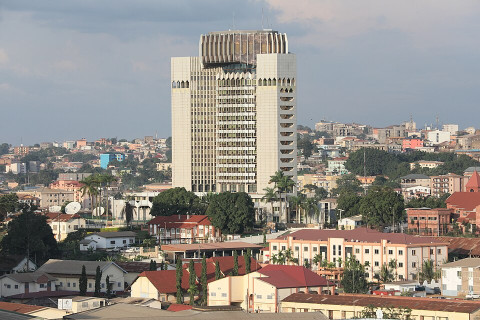
Cameroon this week produced two stories that together paint accurate portrait of where country stands.
First story: opposition leader Issa Tchiroma Bakary — who claims he actually won last year's election — remains in exile in Banjul. His key ally Anicet Ekane died in custody in December while awaiting trial despite suffering from severe respiratory problems. Tchiroma's passage to Gambia was arranged through combination of Fulani intermediaries, Gambian insiders and personal intervention of Gambia's first lady — detail that says something about how political survival works in this region.
Second story: Paul Biya, 93 years old, continues governing country he has led since 1982. Parliament approved vice presidential role that most observers read as succession preparation. Legislative elections have been postponed to December 20.
Chatham House puts Cameroon's situation bluntly — Biya's re-election highlighted persistence of gerontocratic rule across region. In 2026, Denis Sassou Nguesso of Republic of Congo is also seeking to extend his tenure into fifth decade in power. Pattern is consistent: old men hold power, young people wait, and waiting has been going on for so long that some have stopped waiting altogether.
Angola: Patient Diplomacy in a Region That Rewards Patience
Angola had quieter week than its neighbours — which in Central Africa means nothing dramatic happened, not that nothing was happening.
Angolan government conveyed its position on inclusive inter-Congolese dialogue directly to DRC authorities this week, within framework of Angola's ongoing mediation initiatives. Message was about preparation process for dialogue — keeping conversation alive at moment when Kinshasa's political class is distracted by constitutional maneuvering.
This is what Angolan diplomacy looks like from outside — modest, persistent, unglamorous. Lourenço is not making headlines. He is making phone calls, sending delegations, keeping channels open. Whether it produces results is different question. But in region where most diplomatic initiatives collapse after first failure, Angola's willingness to keep trying is itself notable.
What Luanda is watching carefully is whether DRC's constitutional crisis changes dynamics of peace process. If Tshisekedi uses conflict as justification for extending his term, incentive to actually resolve eastern DRC situation — which has been mediocre at best — becomes even weaker. Peace becomes threat to his political survival rather than goal. Angola understands this calculation. It is not clear what it can do about it.
The Week's Uncomfortable Truth
International Crisis Group described African diplomacy in Great Lakes as historically divided and often ineffective. Its prescription — patient engagement, quiet diplomacy, incremental steps — sounds reasonable. It is also what has been tried for thirty years without producing lasting results.
DRC's president is maneuvering to stay in power. Cameroon's president has been in power since before most of his country's population was born. CAR's government survives through Russian military support. Angola is trying to hold everything together through diplomacy.
This is Central Africa's political reality in June 2026. Not crisis, exactly. Not stability either. Something in between — managed dysfunction that has lasted so long it has started to look like normal.