If you look at a map of Central Africa today, you are seeing a version of reality that doesn't quite match what’s happening on the ground. The straight lines dividing countries like the Democratic Republic of the Congo, the Central African Republic, and Chad were mostly drawn by European diplomats in the 19th century. While these borders are still recognized by the UN, they no longer accurately show who actually holds power. By mid-2026, the nation-state hasn't completely disappeared in Central Africa, but it has been hollowed out in many places. Governments still control their capital cities and core territories, but other areas—often the ones with the most natural resources—operate under a different set of rules. These zones are run by foreign corporations, international infrastructure projects, or armed groups that have built their own systems of authority. One of the best ways to see this is through how infrastructure is built. In the past, colonial railways were designed to move minerals to the coast.
The Rise of the Resource Corridors
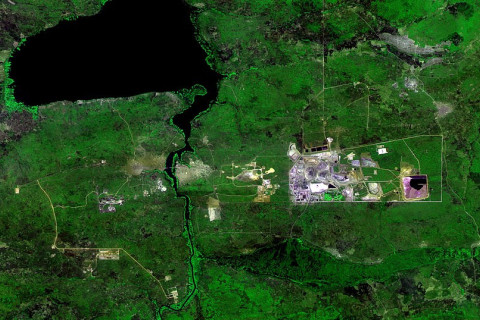
Today, that model has been updated. The Lobito Corridor, which connects the DRC’s copperbelt to the Atlantic coast, is a prime example. It’s backed by the U.S. and Europe to ensure they have a route for critical minerals that doesn't rely on Chinese networks. In these mining hubs, foreign companies operate under complex legal contracts. While they technically follow national laws, the real power often lies with local brokers and security figures rather than the officials in the capital. Technology is also changing the landscape. In eastern DRC, militant groups like the ADF have started using Starlink kits for reliable internet and drones for surveillance. This gives them a level of coordination that was impossible for insurgents a decade ago. It’s a clear example of how technology intended to connect people can also be used by armed groups to challenge the state. However, it’s not just militants using these tools. In the Central African Republic, the government officially launched Starlink in 2026 to help with rural schools and medicine. In the DRC, the same technology helps health workers manage Ebola outbreaks in remote areas. The internet isn’t inherently good or bad for the government; it’s simply a tool used by whoever can afford it, whether that’s a ministry of health or a rebel commander. Governments in the region are trying to push back. For instance, the DRC recently launched a digital ID system called RDC-Pass. It’s a 20-year project designed to give citizens a secure way to access government and financial services. This shows that the state is trying to use the same digital tools to regain control and administrative reach. What’s emerging isn't a total collapse of government, but a messy, competitive system.
Foreign investors, local elites, and armed groups often find the current fragmentation convenient. Centralized states that strictly enforce taxes and labor laws can be expensive and politically difficult for those who benefit from the status quo. Central Africa in 2026 shows what happens when official borders, economic power, and digital tools stop lining up. The map on the wall might look the same, but understanding who is actually in charge requires looking much more closely at the local level.