Central Africa's natural gas sector is no longer following a single development path. While the Republic of Congo, Equatorial Guinea, and Cameroon are all seeking to unlock greater value from their gas reserves, each has adopted a distinct commercial approach. Congo is pursuing rapid offshore LNG exports, Equatorial Guinea is repositioning an established export platform, and Cameroon is using gas to strengthen domestic industry and energy security. What increasingly distinguishes these countries is not the size of their reserves, but how they intend to convert those reserves into long-term economic value. The model that proves most efficient at attracting investment, generating stable revenues, and supporting broader development may ultimately shape the region's competitive position.
Congo: Speed Through Floating LNG
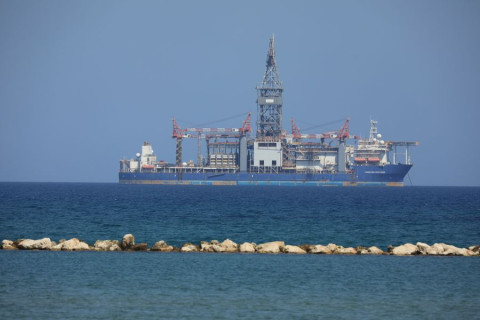
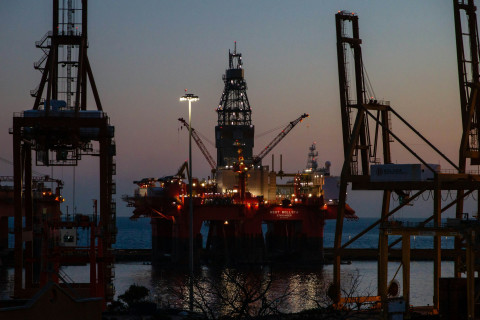
The Republic of Congo has moved the fastest. After years of reinjecting or flaring associated gas, the country entered the LNG market in 2025 and significantly expanded production in 2026 as the second phase of Eni's Congo LNG project came online. The addition of the Nguya FLNG unit alongside the existing Tango FLNG vessel increased total liquefaction capacity to approximately 3 million tonnes per year, giving Brazzaville one of the quickest routes to commercialization available for offshore gas resources. The appeal lies in the floating LNG approach itself. Compared with conventional onshore terminals, FLNG facilities require lower upfront investment, shorter construction timelines, and avoid many of the land acquisition and permitting challenges associated with large coastal infrastructure. For governments seeking earlier cash flow, the model offers an attractive balance between speed and capital efficiency. At the same time, Congo has begun strengthening the regulatory framework surrounding the sector. A new gas code introduced in 2025 is designed to improve commercial certainty while encouraging gas-to-power projects and reducing routine flaring, gradually broadening the economic impact beyond exports.
Equatorial Guinea: Reinventing an Established Export Platform
Equatorial Guinea represents a very different approach. Unlike Congo, the country already possesses mature LNG infrastructure centered around Punta Europa, making it one of Central Africa's longest-established gas exporters. Its challenge today is less about building new export capacity than ensuring existing infrastructure remains commercially competitive. Rather than constructing an entirely new LNG ecosystem, Malabo is working to maximize utilization of facilities already in place while attracting additional gas supplies that can sustain throughput over the long term. This is effectively a regional gas-hub model. Existing processing infrastructure reduces capital requirements for future developments while allowing operators to monetize new volumes without replicating expensive export facilities elsewhere. The strategy nevertheless carries its own risks. Hub-based systems depend on continuous access to fresh gas supplies and ongoing investment. Without both, aging infrastructure gradually becomes less competitive as production from mature fields declines.
Cameroon: Gas as Industrial Development
Cameroon has adopted perhaps the broadest strategy of the three. Rather than treating gas primarily as an export commodity, Yaoundé increasingly views it as a catalyst for industrial development. Natural gas supports electricity generation, LNG exports, industrial supply, and downstream manufacturing, making the sector part of a wider economic diversification agenda. Current priorities include expanding infrastructure around Kribi, strengthening gas-to-power capacity, extending domestic gas networks, and encouraging downstream industries that can utilize locally produced gas. While LNG remains an important component of the strategy, it is only one element of a broader effort to improve energy security and support industrial growth.
That approach offers potentially larger domestic benefits than an export-focused model. Reliable gas supplies can reduce dependence on imported fuels, strengthen electricity generation, and create opportunities for industries such as petrochemicals and fertilizers. The trade-off is complexity. Industrial integration requires significantly greater coordination, financing, and regulatory capacity than projects focused primarily on exports.
Three Paths, One Resource
The contrast between the three countries has become increasingly clear. Congo is prioritizing rapid commercialization through floating LNG facilities. Equatorial Guinea is building on existing export infrastructure to preserve its position as a regional processing hub. Cameroon is attempting to generate broader economic returns by integrating gas into industrial development.
Each approach carries distinct advantages. Congo can bring production to market quickly. Equatorial Guinea benefits from established infrastructure and operational experience. Cameroon has greater potential to retain value within its domestic economy.
Each also faces different constraints. Congo remains exposed to offshore production risks and global LNG prices. Equatorial Guinea must keep legacy infrastructure commercially relevant. Cameroon, meanwhile, needs to demonstrate that its more ambitious industrial agenda can be financed and delivered efficiently.
For investors, the key question is therefore not which country possesses the largest reserves, but which commercial framework proves most resilient over time. Ultimately, Central Africa's future gas leader is unlikely to be determined simply by production volumes or export capacity. The decisive advantage will belong to the country whose approach consistently attracts capital, generates sustainable economic returns, and adapts successfully as global gas markets continue to evolve. In the years ahead, competitiveness will depend less on the resource itself than on the strategy built around it.