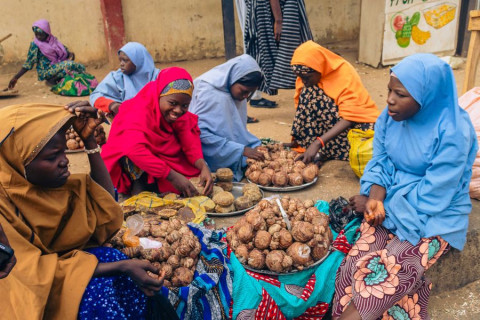
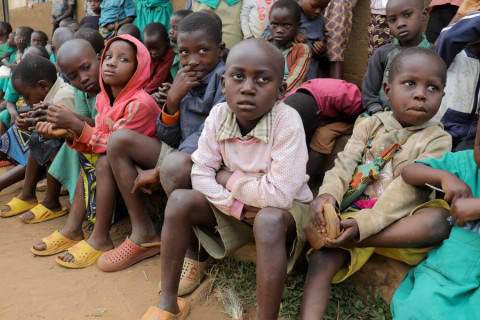
Across Central Africa, young people continue to leave rural communities for rapidly expanding cities, hoping to find better jobs, higher incomes, and greater opportunities. Yet the reality awaiting many young migrants often proves far less promising than they expected. That migration story, however, raises another question that receives far less attention: if the next generation is leaving the countryside, who will produce the food needed to feed the region's growing urban population? The question matters because agriculture remains the backbone of employment across much of Central Africa. Millions of rural households depend on farming, livestock, and small-scale food production for both income and subsistence. Yet agriculture is becoming increasingly unattractive to younger generations, even as the region's population continues to grow at one of the fastest rates in the world.
According to the Food and Agriculture Organization (FAO), Africa's youth population is expanding faster than anywhere else globally, and young people will play a decisive role in shaping the future of agrifood systems. At the same time, the organization warns that agriculture is struggling to attract and retain young workers because many see few opportunities for stable incomes, professional growth, or modern careers in rural areas.
The problem is not that young people reject agriculture itself. More often, they reject the conditions surrounding it.
Small farm sizes, limited access to credit, outdated production methods, weak transport infrastructure, poor digital connectivity, and limited processing industries leave many rural communities offering employment that provides little opportunity for upward mobility. Young people may remain economically active, but too often they see little chance of improving their standard of living by staying where they are.
Cities, despite their own employment challenges, continue to symbolize opportunity. Universities, government institutions, financial services, telecommunications, and private businesses create the perception that long-term success is still attainable. For many young migrants, moving to the city is less about finding an immediate job than about improving their chances of building a different future. The result is a growing imbalance. Urban populations continue expanding, whereas many rural communities are losing precisely the generation expected to modernize agriculture. Older farmers remain active, but replacing them is becoming increasingly difficult. The FAO argues that improving food security over the coming decades will depend not only on increasing agricultural productivity, but also on making farming a profession capable of attracting educated, entrepreneurial young people.
That transformation requires far more than higher crop yields. Rural economies need better roads, reliable electricity, access to finance, modern equipment, digital technologies, food-processing facilities, and stronger links to domestic and regional markets. Agriculture becomes far more attractive when it evolves from subsistence farming into a profitable business capable of offering long-term career prospects. Ultimately, this is a question of economic development rather than agriculture alone. Governments across Central Africa increasingly recognize that industrialization, infrastructure investment, and regional trade cannot succeed without strengthening the agricultural sector that supports them. Growing cities depend on reliable food supplies, while expanding food production depends on retaining enough young people willing to invest their futures in rural economies.
Central Africa is not running out of young people. It is running out of reasons for them to remain on the land. Until rural economies begin offering opportunities that can compete with the promise of the city, the region risks confronting a challenge that extends well beyond migration: sustaining the agricultural workforce needed to feed one of the world's youngest and fastest-growing populations.