On paper, youth unemployment in Central Africa looks surprisingly manageable. Official statistics show rates that in some countries are actually lower than European Union average. But these numbers are deeply misleading — and understanding why they mislead is essential for understanding one of most serious social challenges facing region today.
The Statistical Illusion
Youth unemployment rate in Cameroon stood at 6.5 percent in 2025 according to World Bank ILO modelled estimates — figure that looks almost comfortable by international standards. Central African Republic recorded youth unemployment of 10.1 percent in 2025, rising slightly from 9.99 percent in 2024. DRC's official youth unemployment figure stands at 8.48 percent in latest available data — below world average of 15.7 percent.
These numbers require careful interpretation. Sub-Saharan Africa's youth unemployment rate of 8.9 percent is lower than European Union average of 14.4 percent — but ILO estimates that 71.7 percent of African youth are in precarious employment, meaning they are technically counted as employed while working in conditions of extreme vulnerability.
Reality on ground is fundamentally different from what official statistics suggest.
Angola: High Unemployment, Even Higher Informality
Angola presents most straightforward picture among four countries — official youth unemployment numbers are high and acknowledged.
Youth unemployment in Angola stood at 27.23 percent in 2025, representing slight increase of 0.49 percentage points from previous year. Angola ranked 158th globally on this indicator. Based on recent trends, figure is projected to reach 25.74 percent by 2026.
ven this elevated figure does not capture full extent of problem. Large proportion of young Angolans who are counted as employed are working in informal sector — street trading, subsistence farming, casual labour — without contracts, social protection or stable income. Government's 50 million dollar commitment to train 50,000 workers in digital and AI skills represents one response, but scale of challenge far exceeds current policy ambition.
DRC: Working Does Not Mean Escaping Poverty
Democratic Republic of Congo's low official youth unemployment figure conceals situation that is arguably most severe in region.
Chronic lack of formal sector jobs has resulted in informal sector becoming crucial lifeline for 97.5 percent of workers — meaning only 2.5 percent of working population holds formal employment. Nearly 75 percent of urban population lives in slums. Agriculture sector employs over 60 percent of country's workforce.
DRC and CAR have among lowest formal employment rates in Africa at below 8 percent each. Around two thirds of working young people in these countries are living in extreme poverty — demonstrating that employment itself is not guaranteeing escape from destitution.
Consequences of youth exclusion from formal economy are visible in DRC's cities. Unemployed youth gangs trapped in poverty — known locally as Kuluna — have expanded significantly, terrorising residents across neighbourhoods of Kinshasa and other urban centres. This phenomenon directly connects labour market failure to security deterioration — pattern visible across region.
World Bank calculates that DRC needs to create between 2 million and 4 million jobs every year simply to absorb new entrants to labour market and prevent further increase in poverty. Country does not yet have functioning policy framework to address youth employment at anywhere near required scale.
Cameroon: Low Unemployment Rate, High Precarity
Cameroon's low official youth unemployment figure requires perhaps most careful contextualisation of all four countries.
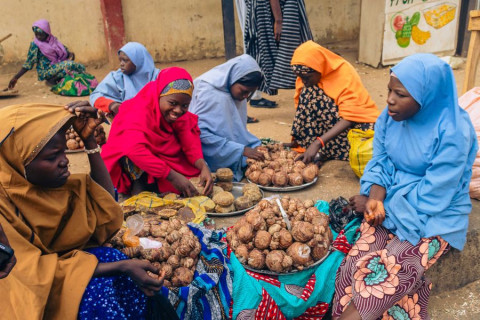
Low rate reflects primarily that most young Cameroonians who need income find some form of activity — not that they find stable, adequately paid formal employment. Majority are absorbed into informal sector in agriculture, petty trade and casual services. As of 2025, nearly as many 15 to 17 year olds across Africa were working as were studying. Among those working, 96 percent held informal jobs and 40 percent were living below international poverty line of 2.15 dollars per day.
Cameroon's National AI Strategy, which targets creation of 12,000 direct AI-sector jobs by 2040, represents government recognition that formal employment base needs to expand. But 12,000 jobs across 15 years in economy where hundreds of thousands of young people enter labour market each year is contribution that needs to be seen in realistic perspective.
CAR: Conflict Removes Youth From Labour Market Entirely
Central African Republic's situation differs from other three countries in important way — ongoing conflict and displacement mean that significant portion of youth population is simply outside any functioning labour market altogether.
Official youth unemployment rate of 10.1 percent in 2025 reflects only those young people actively seeking employment within functioning economic structures. It does not count those displaced by conflict, those in areas where no formal economy exists, or those who have given up active job search entirely.
With 67.5 percent of population living on less than 3 dollars per day and rural poverty rate reaching 78.3 percent, employment challenge in CAR is inseparable from broader questions of state reconstruction, security stabilisation and basic service delivery.
The Bigger Picture: Jobs Versus Productive Employment
Mastercard Foundation's Africa Youth Employment Outlook 2026 notes that as of 2025, youth employment across continent was still concentrated in agriculture, which accounts for 47 percent of jobs and employs approximately 143 million young Africans. Low educational attainment, poverty and lack of social protection accelerate school-to-work transition in way that risks undermining long-term employment prospects in higher-paying formal jobs.
For Central Africa, this continental pattern is more pronounced than almost anywhere else. Region is experiencing economic growth — DRC at 6 percent, Angola diversifying, Cameroon expanding hydropower capacity — but that growth is not generating formal employment at scale needed to absorb young population that is expanding rapidly.
Gap between economic growth and employment creation is defining social challenge of region for decade ahead — and no government in region currently has policy response that matches scale of problem.