DRC: Numbers That Should Keep the World Awake
There is a number that appeared in EU humanitarian report this week. It is worth stopping at it for a moment.
As of 2026, DRC has 5.8 million internally displaced people — down from over 7 million in 2025 due to growing number of returnees. But that improvement comes with a caveat: 90 percent of those displaced are concentrated in North Kivu, South Kivu and Ituri — exact provinces where fighting continues. Returning home for most of them means returning to conflict zone.
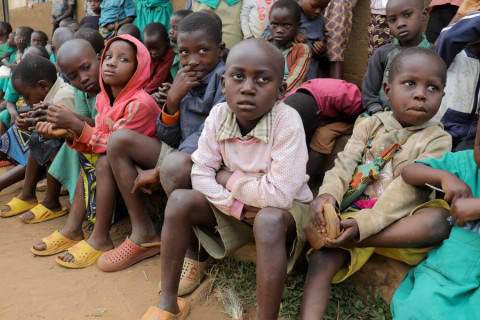
At same time, 4.18 million children aged 6 to 59 months are suffering or expected to suffer acute malnutrition and require urgent treatment. Nearly 1.54 million pregnant and breastfeeding women are malnourished and in need of care.
These are not abstract statistics. They are children who are not growing properly, women whose bodies are failing them, families living in conditions that most people reading this article cannot imagine. DRC is not a distant humanitarian concern. It is largest active displacement crisis in Africa and one of largest in world. It just does not get the attention it deserves.
Cameroon: Nine Out of Ten Regions in Crisis
Cameroon is country that does not appear often enough in international coverage of humanitarian situations. It should.
Nine out of ten regions in Cameroon are affected by three simultaneous complex humanitarian crises — Lake Chad Basin conflict in north, Anglophone crisis in northwest and southwest, and Central African Republic refugee crisis spilling across eastern border. Think about that for a moment. One country. Three overlapping crises. Nine out of ten regions touched by at least one of them.
People in Cameroon are living through something that would be front page news if it were happening in Europe. In Central Africa it is just Tuesday. Humanitarian funding — as always — covers fraction of actual need, and international attention moves on to next emergency before this one is resolved.
CAR: 1 in 5 Central Africans is Displaced
Central African Republic holds distinction that no country wants.
Displacement affects 1 in 5 Central Africans. 736,000 are living as refugees in neighbouring countries. Over 427,000 remain internally displaced inside CAR. Total of more than 69,000 have voluntarily returned since 2017, with over 11,000 returns registered in 2025 alone — primarily from Cameroon and DRC.
UNHCR projects 2.1 million people under its mandate in CAR by end of 2026, including 1.1 million at risk of statelessness. 60,000 returns are expected in 2026 under CAR Solutions Support Platform.
Returns are happening — and that is genuinely positive. People want to go home. But returning to country where state presence outside Bangui is minimal, where armed groups control territory, levy informal taxes and provide whatever passes for justice — that is not return to normal life. That is exchange of one form of precarity for another.
Youth unemployment in CAR is directly fuelling armed group recruitment. With entrenched poverty, absence of formal employment and institutional vacuum outside capital, young men are joining armed groups not necessarily out of ideology but out of absence of any other option. It is not radicalisation in traditional sense. It is a jobs crisis with guns.
Angola: Youth Frustration Is Building — and Politicians Notice
Angola's social picture is different in character from its neighbours — no active armed conflict on its territory, functioning state institutions, oil revenues. But underneath that relative stability, something is building.
Chatham House notes that across Africa and Global South, digitally networked Gen-Z movement is reshaping political discourse. Youth-led mobilisations are challenging governance failures and entrenched authoritarian models. In Angola specifically, urban youth represent MPLA's biggest political vulnerability heading into 2027 elections — connected, frustrated, and increasingly unwilling to accept explanations that worked for their parents' generation.
Fuel subsidy cuts last year brought people into streets. 30 dead. 1,200 arrested. Government did not reverse cuts but also did not address underlying frustration. That frustration has not gone anywhere — it has gone quiet, which is different.
Angola's youth unemployment at 27 percent is official figure. Actual picture of precarious, informal, inadequate employment is considerably worse. For generation growing up in country that exports billions in oil and cobalt while majority of them cannot find stable work — patience has limits.
The Thread That Connects All of This
Displacement in DRC, triple crisis in Cameroon, statelessness in CAR, youth frustration in Angola — these look like separate stories. They are not.
They are all versions of same failure: states that extract resources without building services, collect taxes without providing security, hold elections without delivering accountability. Young people across all four countries are drawing same conclusions. Some are leaving. Some are joining armed groups. Some are organising. Some are simply waiting.
What they are not doing — in any significant numbers — is believing that system will fix itself.