Every major infrastructure project begins the same way - governments celebrate new investment, officials speak of economic transformation, headlines focus on megawatts, kilometres of roads or billions of dollars committed to development. But once construction ends and the ribbon-cutting ceremony is over, a more important question begins.
What actually changes?
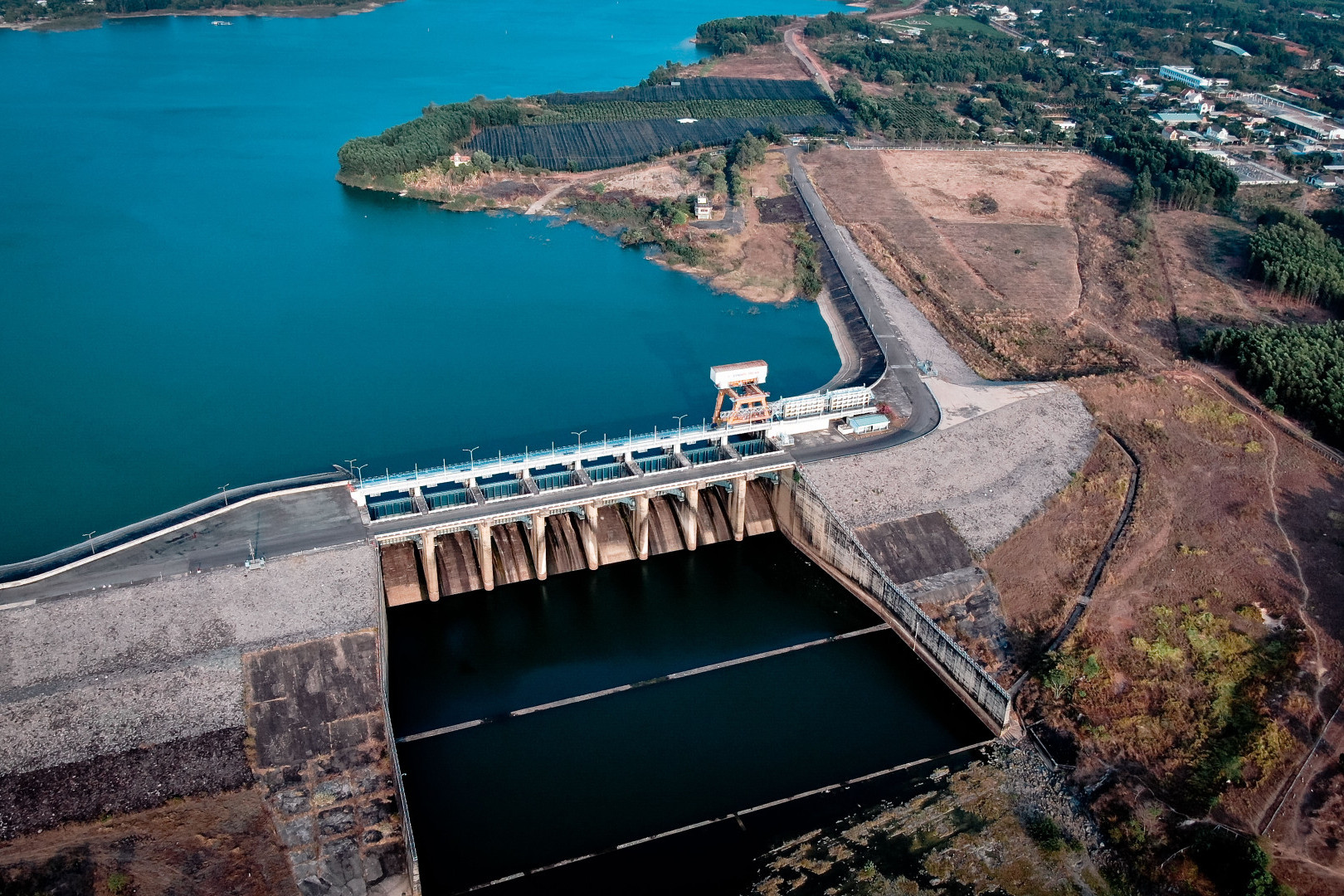
The Busanga Hydropower Plant in the Democratic Republic of the Congo provides an opportunity to ask exactly that. Commissioned as part of the Sicomines mining partnership, Busanga added 240 megawatts of generating capacity to the country's electricity system. From an engineering perspective, the project is unquestionably significant. It represents one of the largest energy investments completed in the DRC in recent years and addresses one of the country's most persistent structural constraints: insufficient electricity generation.
Yet measuring the success of infrastructure requires looking beyond what was built. The first instinct is often to ask whether projects like Busanga have immediately improved electricity access for ordinary Congolese households. On the surface, this seems like the obvious benchmark. The World Bank estimates that only around one-fifth of the country's population currently has access to electricity, despite the DRC possessing one of Africa's largest hydropower resources. But this comparison can also be misleading. A power station alone cannot solve decades of underinvestment in transmission networks, distribution infrastructure, household connections or the financial challenges facing the electricity sector. Generation is only one link in a much longer chain. Busanga itself illustrates this reality. Of its 240 MW installed capacity, approximately 170 MW was specifically allocated to the Sicomines mining operation, while around 70 MW was designated for the national utility SNEL. In other words, the project was never designed primarily as a nationwide electrification programme. It was conceived as an industrial power project with an additional contribution to the national grid. Viewed through that lens, Busanga has largely achieved its immediate objective. Reliable electricity is now available for one of the country's most important mining operations, while additional generating capacity has entered the national system. Those are measurable operational outcomes. The more difficult question is whether operational success eventually translates into broader economic transformation. Large infrastructure projects are frequently presented as catalysts for development. Yet infrastructure, by itself, rarely creates economic growth. It creates the conditions under which growth becomes possible. Whether those conditions are ultimately realised depends on factors well beyond the physical asset itself.
Do businesses gain more reliable electricity? Does manufacturing expand? Do new enterprises emerge? Do households gradually receive new connections? Does improved infrastructure stimulate domestic value creation rather than simply making existing industries more productive? Those outcomes typically take years rather than months to materialise. This distinction matters because infrastructure is often judged too early—and sometimes by the wrong indicators. A power station should not be considered unsuccessful simply because national electrification rates do not immediately surge. Equally, commissioning new generating capacity should not automatically be interpreted as evidence of broad-based economic transformation.
The reality lies somewhere between those two extremes.
Busanga demonstrates that infrastructure can successfully deliver its immediate operational objectives while leaving open much larger questions about long-term development. It has strengthened electricity supply where it was designed to do so. Whether that additional capacity will ultimately support wider industrial diversification, broader access to electricity and sustained improvements in living standards remains considerably less certain.
The turbines are turning.
The electricity is flowing.
What remains far less clear is whether those operational gains will eventually produce the broader structural changes that infrastructure investment is ultimately expected to deliver—or whether they will simply make an already export-oriented economic model more efficient.