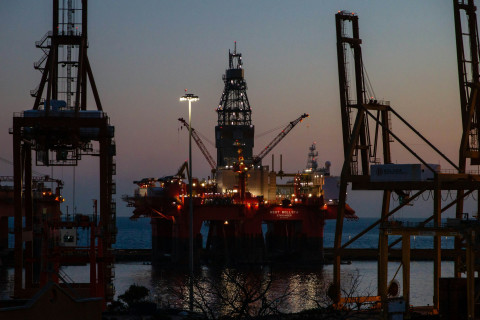
Cameroon's refining industry has spent nearly seven years in limbo. Since the devastating fire at the SONARA refinery in 2019, the country has relied heavily on imported petroleum products despite remaining an oil-producing state. In June 2026, however, the government took its clearest step yet toward reversing that trajectory, launching an international Market Sounding process to gauge investor interest in rebuilding SONARA through a public-private partnership. Rather than simply repairing damaged facilities, Yaoundé is proposing an entirely new generation refinery designed to restore domestic fuel processing and reposition Cameroon within Central Africa's energy landscape.
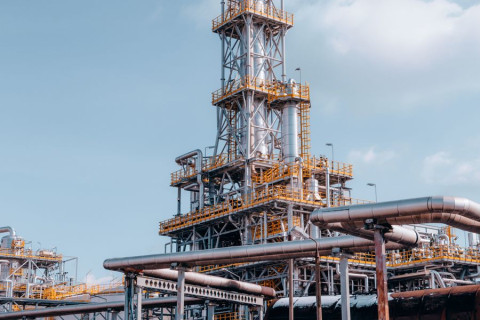
The significance of SONARA extends far beyond a single industrial asset. Located in Limbe, it has long been Cameroon's only refinery and one of the country's most strategic energy facilities. Before the fire, it supplied a substantial share of domestic fuel demand while supporting regional petroleum distribution. Its partial shutdown forced Cameroon to increase imports of refined products, exposing the economy to higher international fuel prices, increased foreign exchange outflows, and greater vulnerability to supply disruptions.
The government's new approach reflects the recognition that restoring refining capacity requires more than public financing alone. Through the Market Sounding exercise, authorities invited international refiners, engineering companies, infrastructure investors, commercial banks, commodity traders, and development finance institutions to assess the commercial viability of the initiative before formal procurement begins. According to Cameroon's Ministry of Finance, the consultation attracted 167 participants, who broadly endorsed the initiative while recommending adjustments to improve its bankability and investment structure. Those recommendations, published in July 2026, are expected to shape the final public-private partnership model ahead of the international tender process.
Officials are no longer presenting SONARA as a simple reconstruction effort. Instead, they describe it as the foundation of a "new-generation refinery" capable of meeting modern environmental standards while improving operational efficiency and long-term financial sustainability. The proposed delivery model follows the internationally recognised Design-Build-Finance-Maintain (DBFM) structure, transferring significant construction and operational responsibilities to private partners while allowing the state to retain strategic oversight.
At the same time, Cameroon's downstream strategy is no longer centred on SONARA alone. Construction continues on the CSTAR refinery in Kribi, a $622 million private-sector investment expected to begin partial operations by the end of 2026. The facility will initially process 10,000 barrels per day before expanding to 30,000 barrels per day by 2027–2028, becoming the country's first major refining investment outside Limbe in decades. Rather than competing directly, officials increasingly present Kribi and SONARA as complementary assets within a broader national refining strategy.
That approach could significantly reshape Cameroon's fuel market. Under the PARRAS 24 recovery plan, SONARA is expected to resume operations in 2027 and eventually supply around 50 percent of domestic petroleum product demand. Combined with Kribi's planned output, Cameroon could once again meet a much larger share of its domestic fuel needs through local refining than it has since 2019, reducing dependence on imports while strengthening national energy security.
Yet rebuilding a refinery and operating a competitive one are two very different challenges.
Global refining margins remain volatile, environmental compliance costs continue to rise, and imported fuels often arrive from larger, more efficient refining centres that benefit from economies of scale. A modernised SONARA will need to compete not only with foreign suppliers but also with increasingly sophisticated refining capacity emerging elsewhere on the continent. Long-term profitability will depend as much on operational efficiency, logistics, and commercial management as on engineering design.
The timing of the initiative also reflects broader changes across Africa's energy sector. Recent supply disruptions, shipping bottlenecks, and geopolitical tensions have highlighted the risks associated with heavy dependence on imported refined products, even for oil-producing economies. For Cameroon, restoring domestic refining has therefore become as much a strategic policy objective as an industrial investment.
Success will ultimately depend on factors extending well beyond construction. Securing private capital, maintaining regulatory stability, implementing an attractive commercial framework, and ensuring long-term competitiveness will determine whether SONARA becomes a profitable industrial asset or another costly infrastructure project.
After seven years without a fully functioning national refinery, Cameroon is attempting something more ambitious than reconstruction. It is trying to rebuild an entire downstream petroleum industry. If successful, SONARA would not simply restore what the country lost in 2019—it could once again make Cameroon one of Central Africa's most important energy processing hubs.