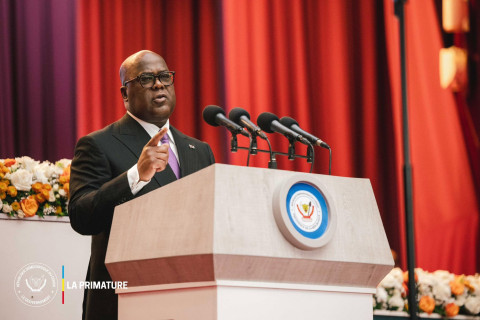
On July 1, Ambassador Zénon Ngay Mukongo assumed the rotating presidency of the UN Security Council on behalf of the Democratic Republic of the Congo. Although the position is largely procedural, it gives the presiding country meaningful influence over the Council's agenda, the scheduling of debates, the timing of briefings, and which crises receive formal attention during its month in office.
Kinshasa wasted little time using that opportunity.
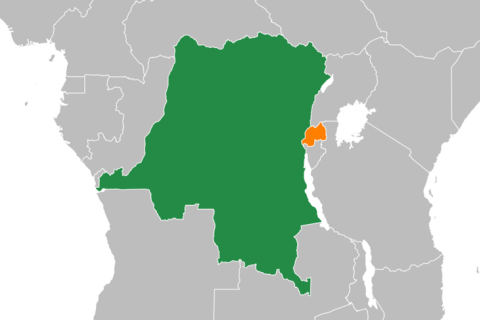
Only days before taking the Council presidency, the DRC formally filed a case against Rwanda at the International Court of Justice, accusing Kigali of violating multiple international treaties, including the Genocide Convention, the Convention on the Elimination of Racial Discrimination, the Convention Against Torture, and the Convention on the Elimination of All Forms of Discrimination Against Women. The timing was hardly accidental. The ICJ filing and the Security Council presidency form part of a broader diplomatic strategy designed to maximize international pressure while Kinshasa briefly controls the Council's calendar.
The DRC is serving on the Security Council for the third time and for the first time since winning a non-permanent seat for the 2026–2027 term with 183 votes out of 187 cast. Foreign Minister Thérèse Wagner described the mandate not only as a national responsibility, but also as an opportunity to represent broader African interests. For a country struggling to keep international attention focused on a conflict that has cycled through ceasefires, peace initiatives, and renewed fighting for more than three years, a month directing the Security Council's agenda may be its most valuable diplomatic asset.
What the presidency can — and cannot — achieve
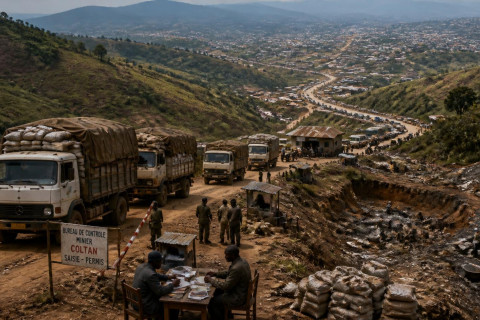
Holding the presidency does not allow the DRC to rewrite Security Council policy or force new decisions through the Council. It does, however, allow Kinshasa to shape the conversation by deciding which meetings receive priority, which officials are invited to brief members, and how frequently the conflict appears on the Council's formal agenda. That visibility matters because the DRC's immediate objective remains unchanged: maintaining international pressure for the implementation of Resolution 2773, adopted in February 2025. The resolution calls for the withdrawal of Rwandan forces from eastern DRC and demands that the AFC/M23 coalition dismantle the parallel administrative structures it has established in territory under its control. Eighteen months after its adoption, however, the underlying reality has changed little. Independent assessments, as well as the DRC's own position, continue to indicate that Rwandan forces remain active in eastern Congo, while M23 continues administering Goma and surrounding areas. Resolution 2773 remains diplomatically significant, but, without effective enforcement, it has done little to alter the military balance on the ground. That distinction may be summarized simply: a Security Council resolution without enforcement remains a diplomatic instrument, not a battlefield reality.
Keeping pressure on multiple fronts
The DRC's Security Council presidency is only one component of a broader diplomatic campaign. During July, the Security Council's DRC sanctions committee designated six individuals and two armed groups, including AFC leader Corneille Nangaa, M23 intelligence chief John Nzenze, and commanders from the FDLR operating on the opposing side of the conflict. Whether those sanctions reflected Kinshasa's influence over the Council's agenda or the committee's own timetable, they reinforced the same political message: international attention remained firmly focused on eastern Congo throughout the presidency month.
The ICJ proceedings represent a second, far longer-term track.
Unlike Security Council resolutions, which depend on political consensus among fifteen members, proceedings before the International Court of Justice follow an independent legal process that may continue for years. Justice Minister Guillaume Andali's decision to invoke the Genocide Convention alongside several other international treaties significantly raises the legal stakes and signals that Kinshasa intends to build a judicial record extending well beyond its single month at the head of the Security Council.
Yet neither track exists in isolation.
Another diplomatic arena
The Security Council is no longer the only forum shaping international efforts to address the conflict. The Washington Accords, signed on December 4, 2025, established the principal US-brokered framework for de-escalation. Under that process, the Joint Oversight Committee met in April 2026 to review implementation, while Qatar continued facilitating the parallel dialogue involving AFC/M23. The partial withdrawal of M23 from Uvira in May demonstrated that the bilateral track could produce measurable results under specific conditions. Even so, the group's broader territorial control, including Goma, remains largely unchanged. That leaves the DRC pursuing three parallel diplomatic strategies simultaneously: maintaining political pressure through the Security Council, building a legal case before the ICJ, and participating in the Washington-led peace process. Each serves a different purpose, yet none has, on its own, secured the withdrawal of Rwandan forces or the dismantling of M23's political and military structures.
Visibility versus influence
The Security Council presidency cannot change the military situation in North and South Kivu. What it can do is ensure that the conflict remains visible at the highest level of international diplomacy. That distinction becomes especially important after July. The presidency rotates to another member state on August 1, and the DRC will lose its temporary ability to influence the Council's schedule. The ICJ proceedings, by contrast, will continue regardless of who holds the Council's gavel. Ultimately, Kinshasa's challenge is not simply to attract international attention, but to convert temporary visibility into sustained diplomatic leverage. The Security Council presidency offers a month in the spotlight. The ICJ offers a legal process measured in years. Whether either proves capable of changing realities on the ground remains a far more difficult question than controlling the Council's agenda for thirty-one days.